By unlocking rare, evolutionarily conserved rust resistance locus from the Sudanese sorghum core collection, this work bridges global germplasm diversity with modern breeding, revealing Rp2 locus is a tractable genomic entry point for stacking durable, multi-disease resistance and strengthening the genetic resilience of U.S. sorghum improvement.
By unlocking rare, evolutionarily conserved rust resistance locus from the Sudanese sorghum core collection, this work bridges global germplasm diversity with modern breeding, revealing Rp2 locus is a tractable genomic entry point for stacking durable, multi-disease resistance and strengthening the genetic resilience of U.S. sorghum improvement. – Cuevas
U.S. sorghum breeding programs rely heavily on the genetic diversity preserved in the tropical sorghum collection maintained by the United States Department of Agriculture-Agriculture Research Service, National Plant Germplasm System (NPGS). However, photoperiod sensitivity and the collection’s size have limited its use in temperate breeding. The Sudan core collection includes landraces with valuable agronomic traits, superior grain quality, and strong resistance to major foliar diseases such as anthracnose and rust, making it an important resource for broadening the genetic base of elite germplasm. Researchers from the USDA-ARS evaluated the Sudan core collection for rust-resistant response across four tropical environments. Although rust-resistant accessions were less frequent (7%) than anthracnose-resistant ones (21%), several accessions exhibited dual resistance, especially those from population 3 and admixed groups, likely reflecting adaptation to diverse agroecological zones in Sudan. These accessions represent promising sources of multi-disease resistance and could be strategically incorporated into breeding programs to enhance resistance durability and genetic diversity in cultivated sorghum.
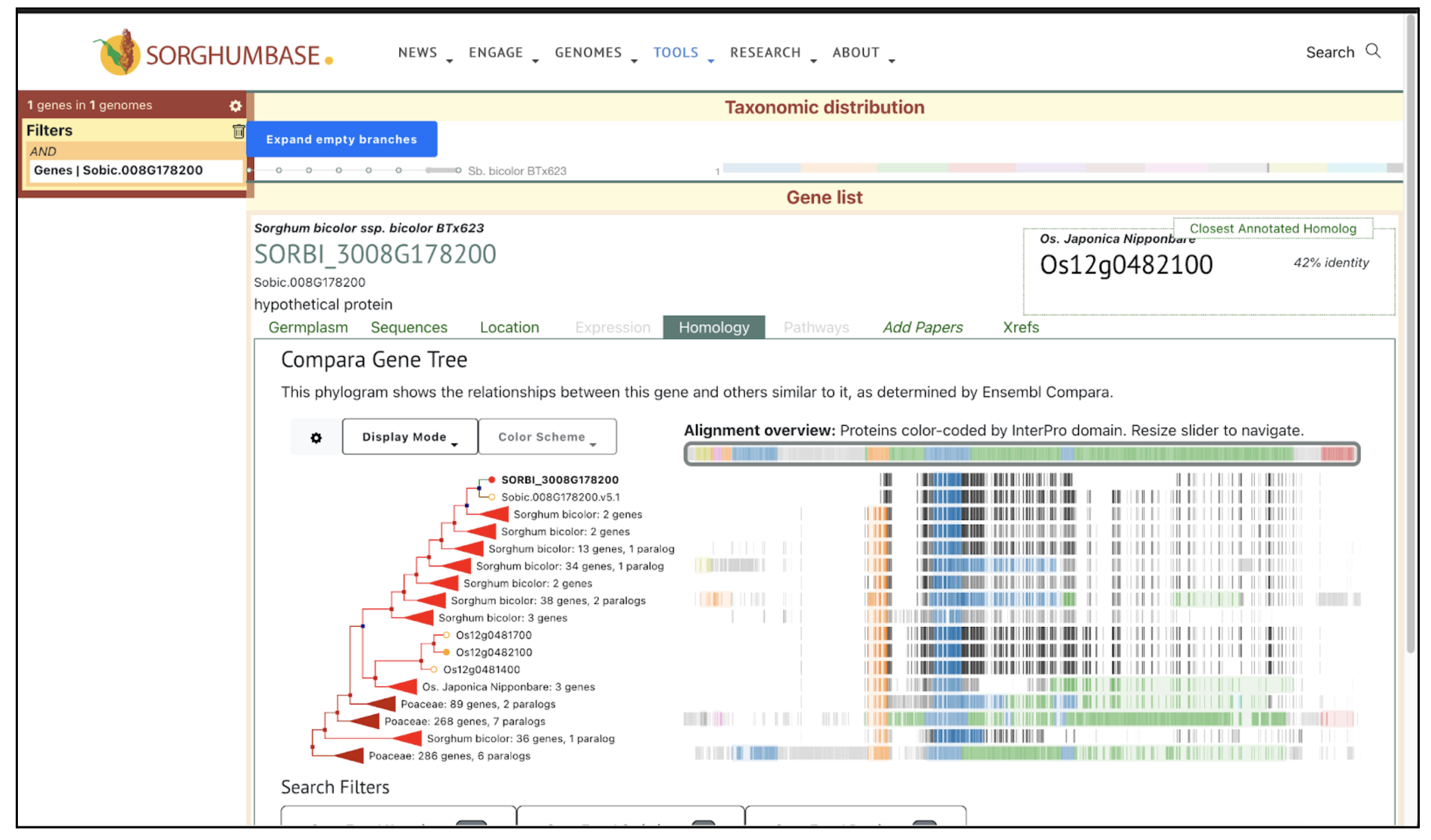
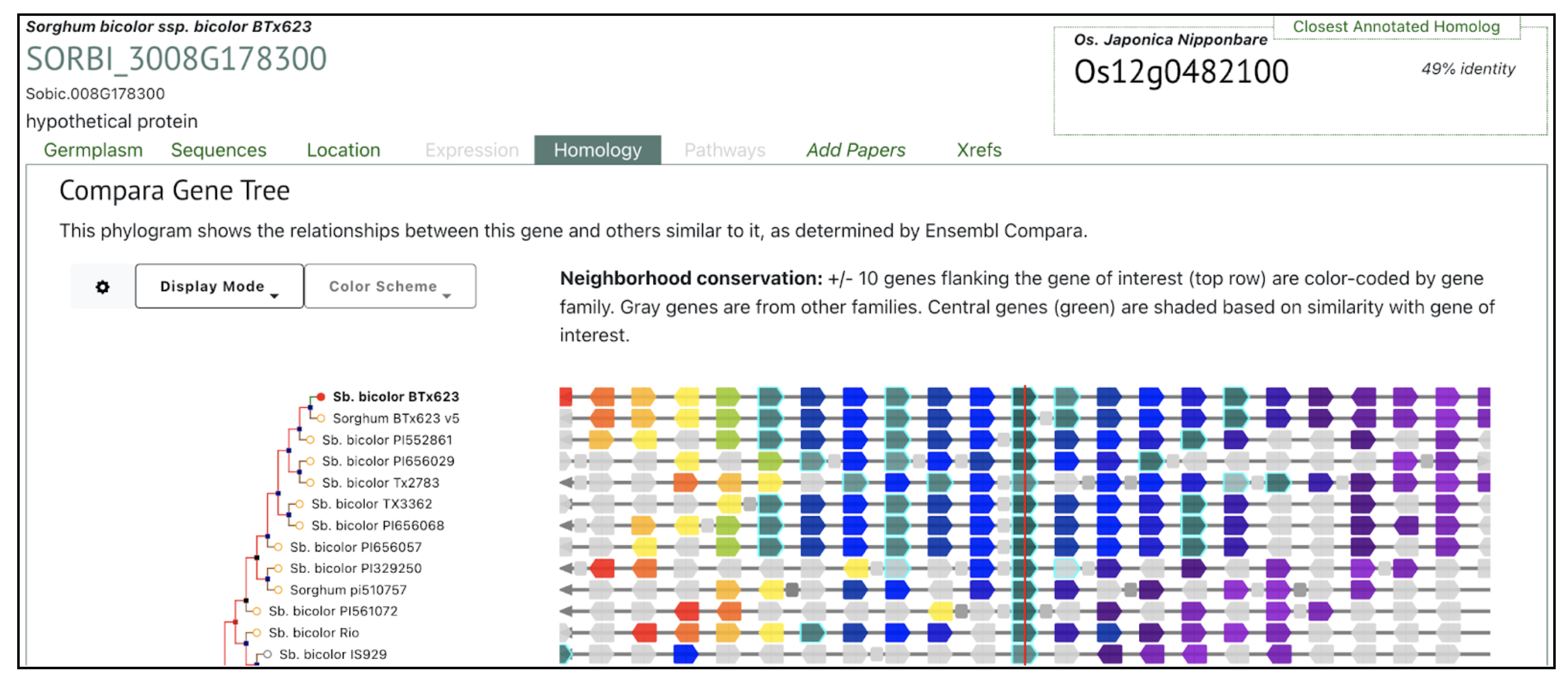
Genomic analysis identified the Rp2 locus as a novel rust resistance source in sorghum. This locus comprises a cluster of five NBS–LRR genes within a high-recombination region, suggesting rapid evolution and functional diversification to recognize multiple pathogen effectors. Comparative synteny analysis revealed conservation of Rp2 orthologs across maize and rice, supporting a shared ancestral origin and functional parallels in resistance responses to diverse pathogens and pests. Given its genomic location and potential for stacking with other known rust resistance loci on chromosome 8, Rp2 is an attractive target for marker-assisted selection. However, its resistance allele is rare in U.S. breeding germplasm (minor allele frequency = 0.05), underscoring the need for introgression from Sudanese tropical accessions. Developing SNP markers across the Rp2 region and adapting key donor lines to temperate environments will facilitate the deployment of this valuable resistance locus in modern sorghum improvement.
SorghumBase Examples:
Reference:
Cuevas HE, Prom LK. The NPGS Sudan sorghum germplasm collection reveals a novel cluster of R genes associated with rust resistance. Plant Genome. 2025 Sep;18(3):e70113. PMID: 40955042. doi: 10.1002/tpg2.70113. Read more
Related Project Websites:
- Hugo Cuevas’ Research Project page at the USDA-ARS: https://www.ars.usda.gov/research/project/?accnNo=434432