SbHMA5 is a conserved P1B-type copper ATPase in sorghum that maintains copper homeostasis by interacting with metallochaperones to efflux excess Cu from the cytosol, thereby protecting plant growth and development from copper toxicity.
Keywords: Cu homeostasis, Genome wide analysis, HMA, Heavy metal transport, Metallochaperones, P1B type ATPase, SbHMA5, Sorghum bicolor
Copper (Cu) is an essential micronutrient, but becomes highly toxic when present in excess, necessitating strict cellular regulation across all organisms. Scientists from the USDA-ARS and Oklahoma State University conducted a study which characterizes SbHMA5, a sorghum P1B-type Cu-ATPase, as a key component of Cu homeostasis. SbHMA5 exhibits strong structural and functional conservation with known Cu transporters such as Arabidopsis AtHMA5 and rice HMA5, including conserved motifs and plasma membrane localization typical of P1B-type ATPases. Functional conservation was further supported by heterologous yeast complementation, where SbHMA5 rescued the Cu-transport–deficient ∆ccc2 mutant. Comparative genomic analyses revealed an expansion of the HMA gene family in sorghum, with 31 members compared to eight in Arabidopsis and nine in rice. Notably, SbHMA5 underwent tandem duplication, producing SbHMA5 and SbHMA5L, likely after the sorghum–rice divergence. This expansion may contribute to enhanced Cu tolerance and adaptive capacity in sorghum, although the specific function of SbHMA5L remains unresolved.
Beyond transport activity, SbHMA5 was shown to physically interact with metallochaperones SbATX1 and SbFRN3, as demonstrated by yeast two-hybrid and bimolecular fluorescence complementation assays. Metallochaperones play a critical role in binding and safely delivering Cu ions to target proteins, preventing oxidative damage caused by free Cu in the cytosol. The interaction between SbHMA5 and SbATX1 mirrors conserved Cu delivery mechanisms described in yeast, mammals, and other plants, suggesting a central role for this complex in Cu trafficking and detoxification. While SbFRN3 remains poorly characterized, its interaction with SbHMA5 suggests potential involvement in metal stress responses. Collectively, these findings indicate that SbHMA5, together with associated metallochaperones, is a central regulator of Cu efflux and homeostasis in sorghum, supporting normal plant growth and development from early stages through grain filling.
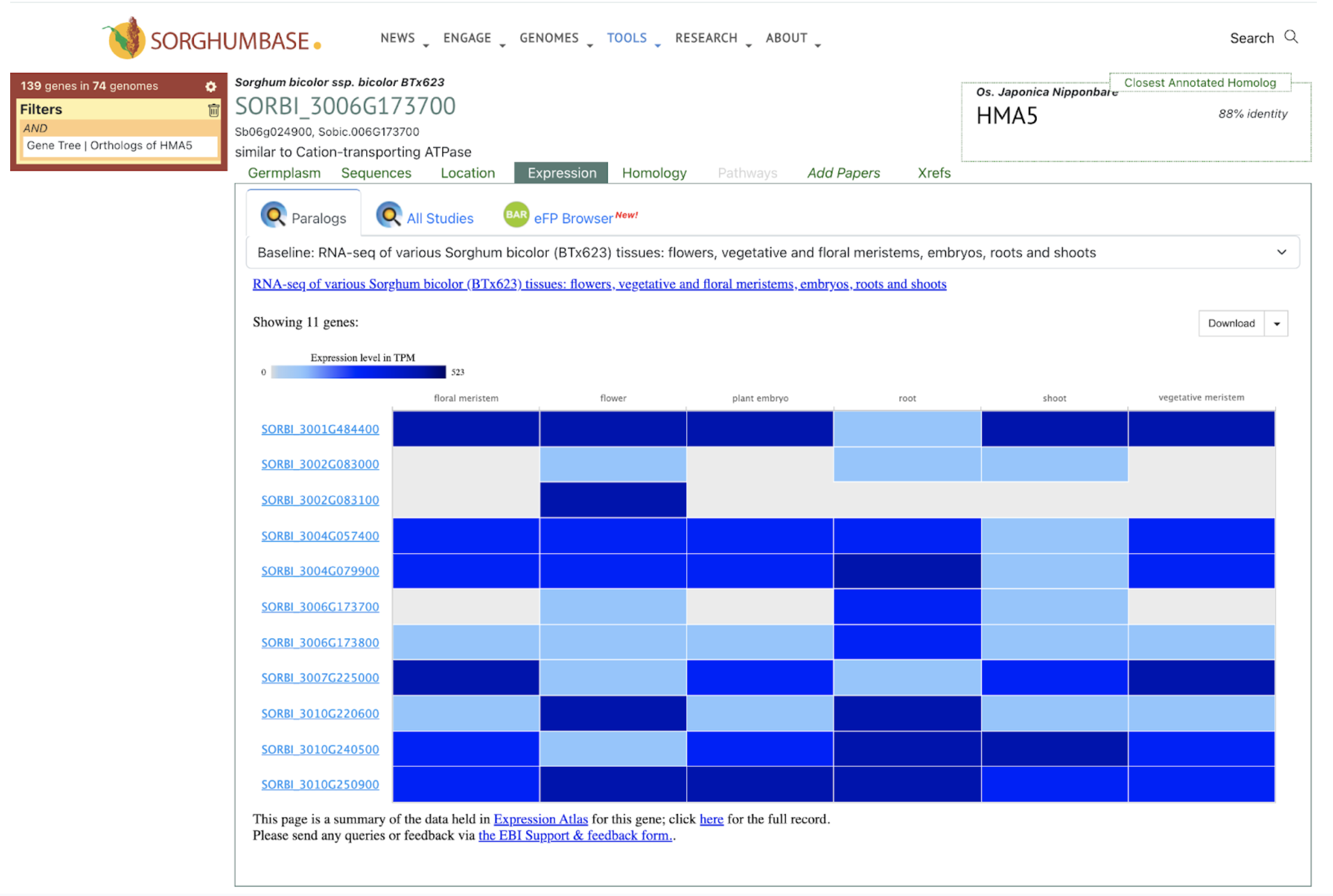
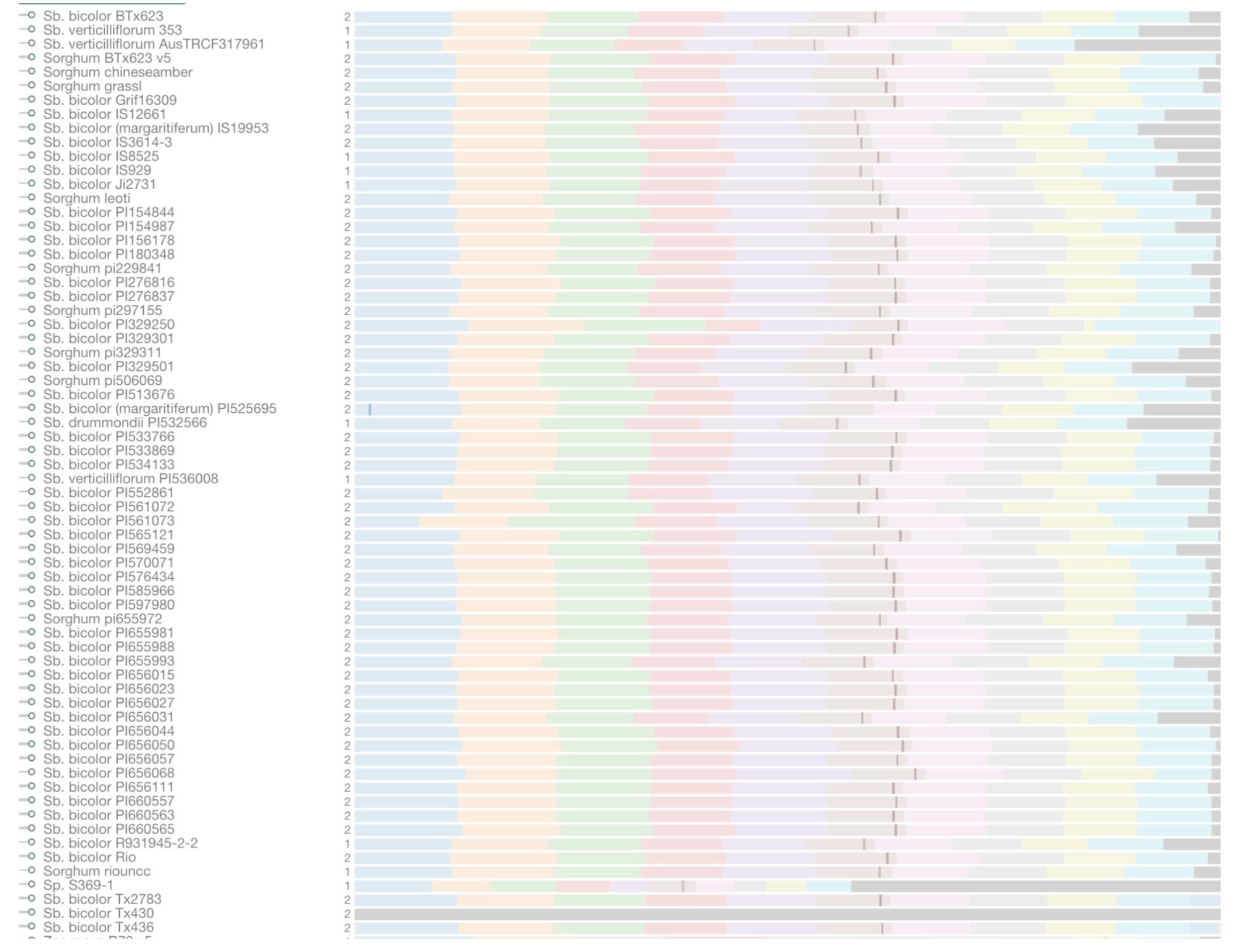
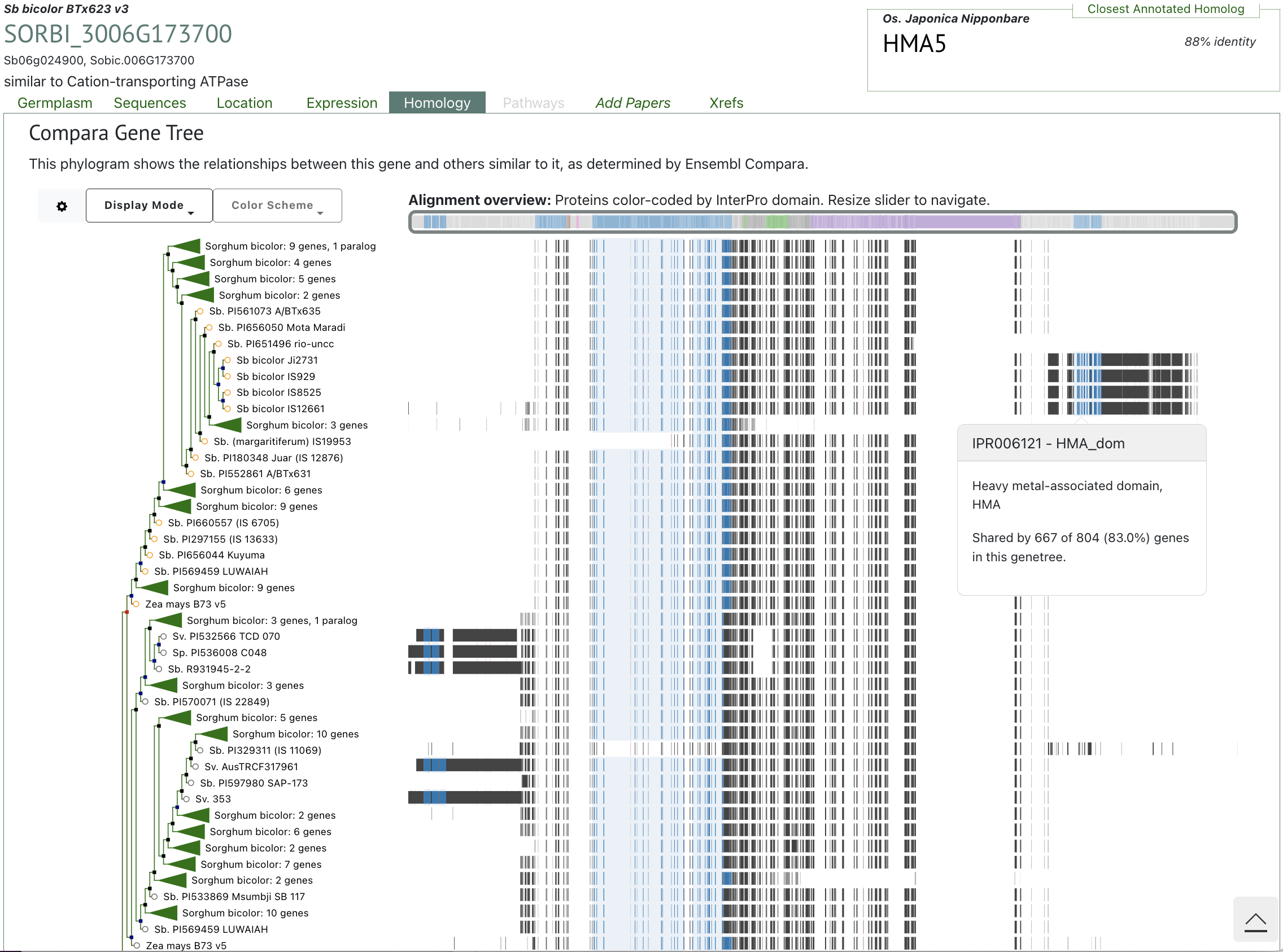
SorghumBase examples:
Reference:
Tadesse D, Tancos MA, Tadege M. SbHMA5 is a P1B-type Cu ATPase involved in Cu homeostasis by interacting with metallochaperones SbATX1 and SbFRN3. Plant Sci. 2025 Dec 21;364:112956. PMID: 41435976. doi: 10.1016/j.plantsci.2025.112956. Read more
Related Project Websites:
- Matthew Tancos’ Page at the USDA-ARS: https://www.ars.usda.gov/northeast-area/frederick-md/foreign-disease-weed-science-research/people/matthew-tancos/
- Million Tadege’s page at Oklahoma State University: https://experts.okstate.edu/million.tadege